

Banda Aceh – detikperistiwa.co.id
For many people affected by disasters in Aceh, the hardest part can begin after the emergency has passed. Families may still be struggling to repair their homes, farmers may be unable to work their land, and household incomes may remain uncertain. Helping these communities recover requires reliable information, clear responsibilities and better coordination between the institutions involved.
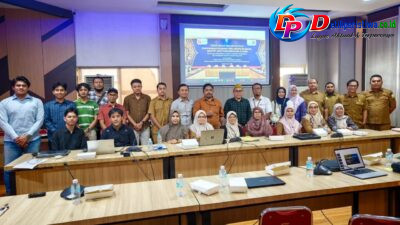
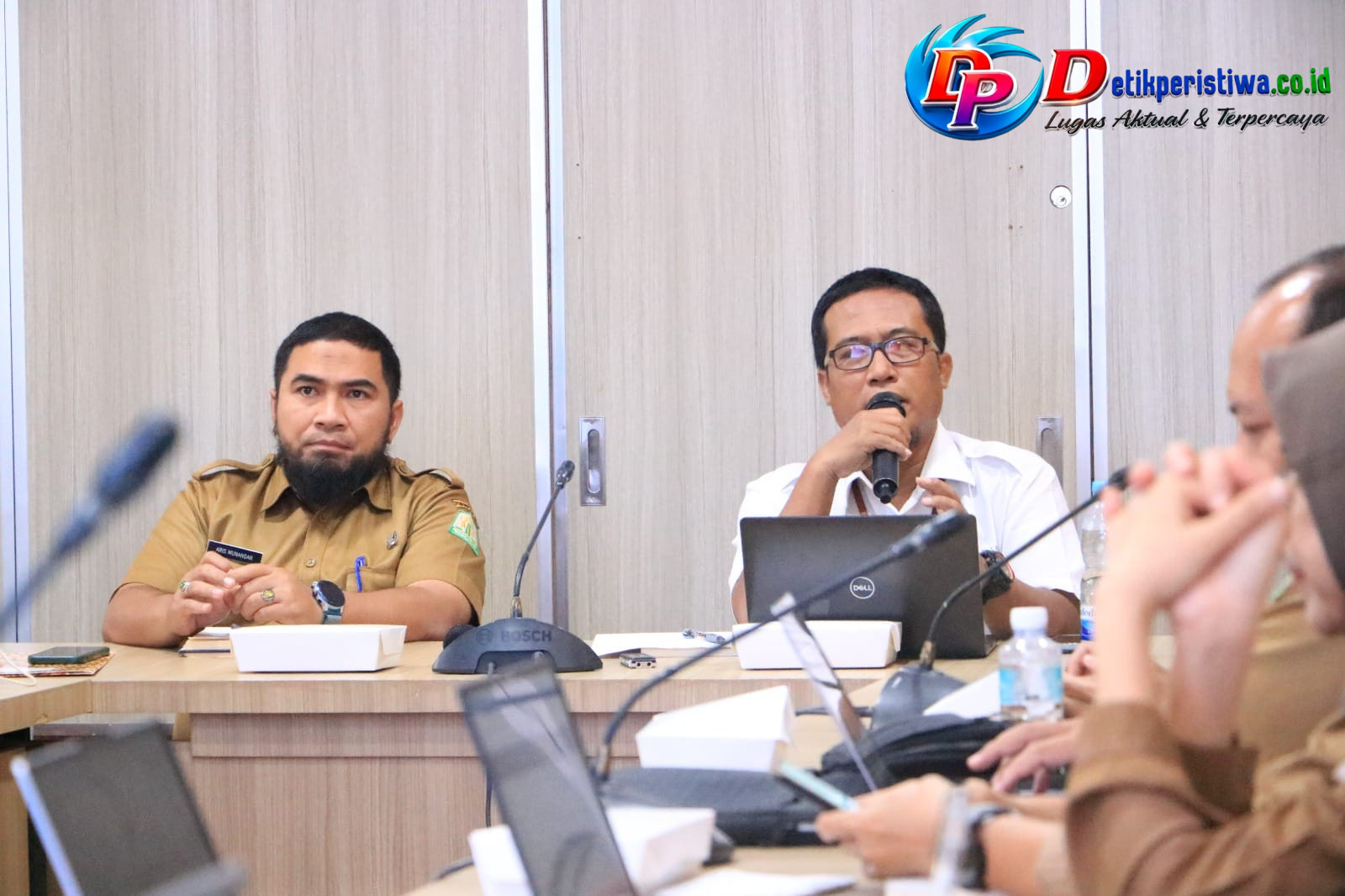
These issues were discussed at a focus group discussion (FGD) on the development of an Adaptive Social Protection (ASP) Roadmap for Post-Disaster Recovery, held at the Aceh Regional Development Planning Agency (Bappeda Aceh) on Tuesday, 27 October.
The meeting considered field findings from a research team at Indonesia’s National Research and Innovation Agency (BRIN) and brought together various stakeholders to provide input for the development of social protection policies for disaster-affected communities.
Among the institutions and organisations represented were WRI Indonesia, the Aceh Public Works and Spatial Planning Agency, the Aceh Agriculture and Plantation Agency, the Aceh Environmental and Forestry Agency, the Aceh Social Affairs Agency, the Aceh Housing and Settlement Areas Agency, the Aceh Disaster Management Agency (BPBA), Universitas Almuslim, Aceh Studies/SRI and Syiah Kuala University.
One of the challenges in post-disaster recovery is making sure that different institutions work with accurate and consistent information. When records do not match or fail to reflect conditions on the ground, identifying those most in need of assistance becomes more difficult. Delays can follow, and some affected families may be overlooked.
Clear responsibilities are just as important. Each institution needs to understand its role, while recovery programmes must be coordinated to avoid unnecessary duplication and ensure that available support reaches the right people.
The difficulties facing farmers illustrate why recovery needs to be based on conditions in the field. Flooding and heavy deposits of mud can damage farmland and irrigation channels, leaving some farmers unable to plant their crops. For families who depend on agriculture, the loss of a harvest can mean months without a dependable income.
The consequences reach beyond the fields. Without their usual earnings, families may struggle to pay for food, everyday expenses and their children’s education. Assessing the damage, identifying the most urgent needs and providing suitable assistance are therefore important steps towards helping farmers return to work.
Village administrations, known locally as gampong governments, can help ensure that recovery efforts reflect the needs of their communities. They are familiar with local conditions and can help identify affected households, report damage and communicate residents’ concerns to the relevant authorities. Their involvement also gives communities an opportunity to take part in decisions that affect their recovery.
Local preparedness deserves attention as well. Mosques and meunasah, traditional prayer and community meeting places in Aceh, can be used for disaster awareness activities, emergency information and community coordination. If they are to serve as evacuation centres, their locations and buildings must first be assessed for safety and suitability.
Emergency assistance remains essential, but it cannot resolve every problem left by a disaster. Families also need opportunities to return to work and rebuild their incomes. Support for farmers, the restoration of damaged infrastructure and improvements to environmental management can all contribute to a more lasting recovery.
The input gathered during the discussion is expected to contribute to the development of the Adaptive Social Protection Roadmap for Post-Disaster Recovery. Its effectiveness will depend on whether the resulting plans can be put into practice and address the needs identified by affected communities.
For people rebuilding their lives in Aceh, progress will be felt in practical ways: a home that is safe to live in, farmland that can be cultivated again, an income that supports the family and essential services that are within reach.
The impact of a disaster does not disappear when the emergency response ends. Recovery takes time, and the people affected need consistent support, clear action and institutions that work together. Ultimately, the aim must be to help families regain their livelihoods and rebuild their lives with dignity.