

Banda Aceh | detikperistiwa.co.id
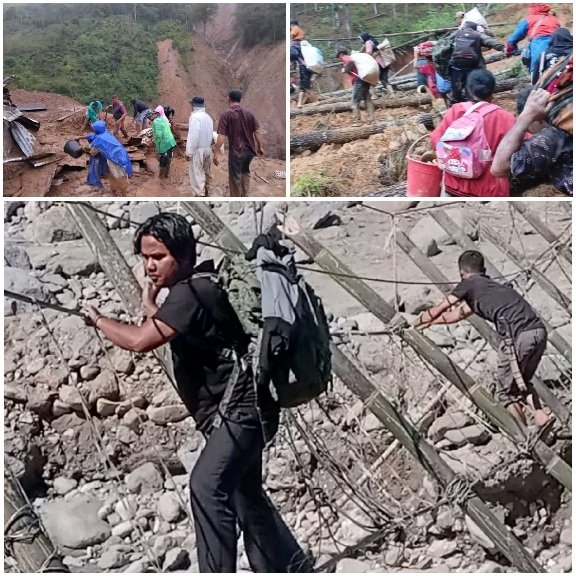
When the massive floods finally receded from the highlands of Aceh, the waters vanished, but fear, hunger, and profound loss grew even heavier. Beneath the drying layers of mud lie countless human stories filled with pain: mothers calming their children with nothing but water, elderly people shivering inside makeshift tents, and families watching hope slip further from their grasp.
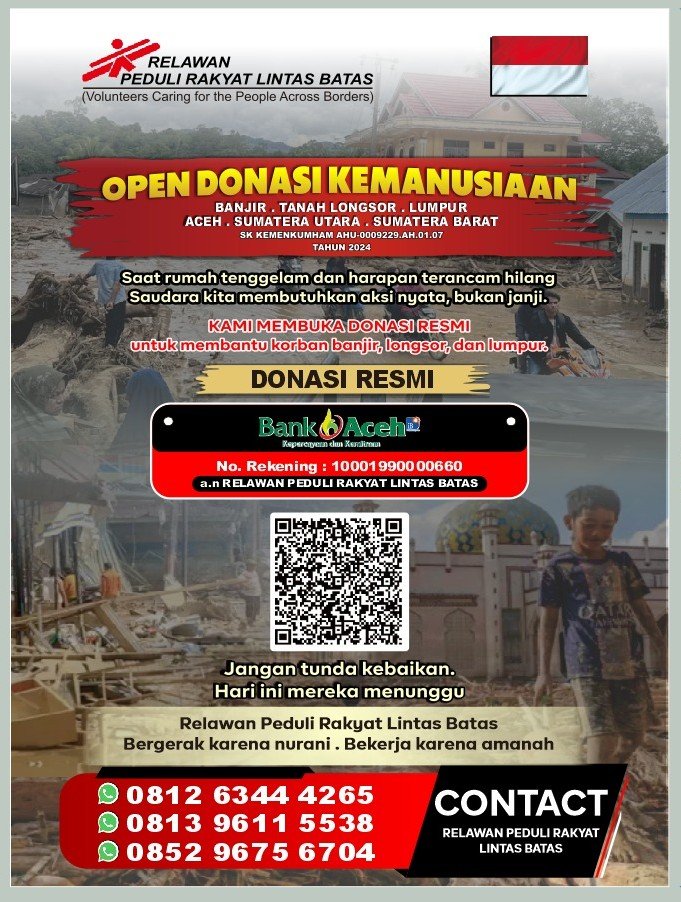
Amid this wave of suffering, Arizal Mahdi, Chairman of Relawan Peduli Rakyat Lintas Batas (People’s Care Volunteers Without Borders), issued his strongest appeal since the disaster began: “Open access to international aid. Do not allow our people to die of hunger.”
“We Survived the Flood, But Not the Hunger”
In Central Aceh, a father holds his pale child close on a thin mat. For three days, they have survived on nothing but mud-soaked biscuits. His wife has fallen ill after drinking contaminated water. Gratitude for surviving the floods has now turned into deep anxiety.
They are not alone.
In Bener Meriah and Aceh Tamiang, similar stories echo from every direction. Thousands of families are struggling with dwindling supplies. Medicines are running out. Many children have collapsed from lack of food. Elderly survivors lie weak and exhausted. Babies cry from thirst, deprived of adequate formula milk.
And from all these accounts emerges one undeniable truth: most post-flood fatalities are not caused by the water itself, but by hunger.
Arizal Mahdi’s Sharp Rebuke: “This Is Not Politics. This Is Human Life.”
Arizal Mahdi condemned the refusal to accept foreign assistance during such a critical moment, calling it unethical and contrary to the principles of humanity.
“There is nothing more painful than watching our people starve while the world stands ready to help. Why are we closing the door when our people can barely stand? This is not about politics, not about pride. This is about human lives.”
He explained that field reports show communities facing critical shortages of:
safe drinking water
basic medicines and medical supplies
proper shelter and resting spaces
warm clothing
infant formula and supplies for children
“This situation is acute. When international assistance is rejected, the suffering does not simply continue—it intensifies,” he stated.
The Story of a Mother in Central Aceh: A Small Candle in the Darkness
In a remote village surrounded by mud, a mother lights a small candle inside a dark tent. Her three children sit huddled, trying to dispel the fear that lingers long after the waters have gone. The night wind is cold, making their voices tremble.
With a faint whisper she says:
“Even if there is no food, please… at least let someone come and see us.”
This simple sentence reflects an unspoken grief—a silent cry rarely heard by the outside world.
“Aceh Must Not Experience 2004 for the Second Time”
For many residents, the trauma of 2004 remains deeply embedded in memory. The devastating tsunami once took everything from them. Now, the floods have shaken their sense of safety once again—not only because of the water, but because of the looming threat of hunger.
Arizal Mahdi emphasised that many friendly nations have already expressed readiness to dispatch emergency aid, from ready-to-eat meals to medical teams.
“Aceh must not face a second tragedy. Our people must not suffer further loss simply because help does not arrive in time,” he warned.
The People’s Last Hope: “Please Open the Door… We Cannot Hold On Anymore”
Today, three districts—Bener Meriah, Central Aceh, and Aceh Tamiang—are in an extremely worrying state. Evacuation shelters are overcrowded. Post-flood illnesses are beginning to emerge. Hunger is becoming increasingly real and widespread.
In several areas, residents sit along the roadside, hoping for the faint sound of an approaching aid vehicle. Some cry silently. Others remain speechless in despair. Many simply hold their children tightly, praying for a small miracle tonight.
A Final Humanitarian Appeal to the World
Aceh is not asking for anything luxurious.
Aceh is only asking for food, clean water, medicine, tents, and blankets.
And once again, Arizal Mahdi delivers his call:
“Help Aceh. Humanity knows no borders. When people are starving, there is no justification for refusing aid. This is the time to open the door, not close it.”
(Red)