

Bireuen – 1fakta.com
A 2-Hectare Site In Alue Kuta Is Being Used As A Pilot Area To Test Land Productivity Restoration And Support The Recovery Of Local Livelihoods
Nine months after the floods struck the area, the recovery needs of communities whose livelihoods depend on agriculture remain significant. As the emergency response phase has passed, the next challenge is to restore affected agricultural land so that it can once again support production and provide a sustainable source of income for local communities.
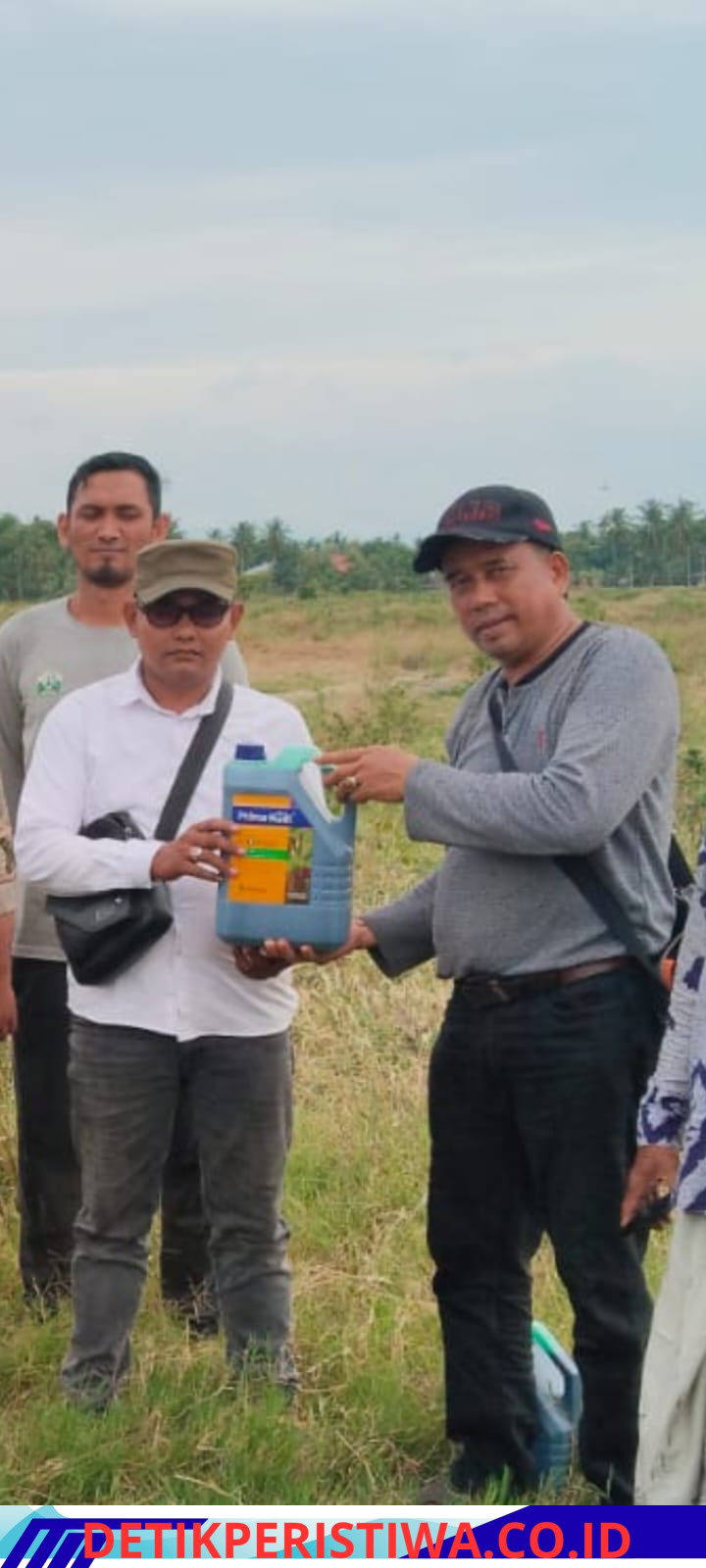
Against this backdrop, Relawan Peduli Rakyat Lintas Batas (RPRLB) is implementing a pilot programme for post-flood agricultural land recovery through peanut cultivation in Alue Kuta Village, Jangka Sub-district, Bireuen Regency, Aceh.
The initial programme covers 2 hectares of land. The site is being used as a pilot area to assess, in practical terms, the potential for restoring flood-affected agricultural land through a measured, community-based and sustainable farming approach.
For RPRLB, nine months after the disaster represents an important stage in the recovery process. Attention must move beyond immediate emergency assistance towards restoring livelihoods, agricultural productivity and the economic resilience of affected communities.
NINE MONTHS ON, RECOVERY MUST MOVE FORWARD
The effects of flooding can continue long after the floodwaters have receded.
Changes in soil conditions, sediment deposition, drainage problems and other post-flood impacts may affect the ability of agricultural land to return to productive use.
For farmers, this is not simply a matter of land management.
When agricultural land becomes unproductive, household income and economic security can also be affected.
Nine months after the disaster, therefore, represents an important period for moving from emergency response towards longer-term recovery and the restoration of productive livelihoods.
RPRLB’s approach is straightforward but strategic: begin with available land, test its potential in practice, document the results, and use the findings to inform future decisions.
TWO HECTARES AS A PILOT SITE
The initial 2-hectare area in Alue Kuta is being used as the first stage of the programme.
The scale has been selected to allow the recovery process to be monitored and evaluated systematically, from the initial condition of the land through to the final cultivation results.
The programme includes several stages, including assessment of the land, land preparation, planting, crop maintenance, monitoring, harvesting, post-harvest handling and evaluation.
In addition to monitoring crop development, the programme will record production requirements, technical challenges, harvest results and relevant economic considerations.
This approach means that the programme is intended not merely to carry out agricultural activity, but also to generate practical evidence and lessons that can inform decisions about future development.
PEANUTS AS THE PILOT CROP
Peanuts have been selected as the pilot crop for testing the potential of the land under post-flood conditions.
This does not mean that peanuts are being presented as the only suitable crop for flood-affected land.
Rather, the initial cultivation is intended to assess land suitability, cultivation methods, productivity, production costs and potential economic returns.
The findings will help determine whether the approach should be expanded, modified or complemented by other crops better suited to local soil conditions and community needs.
RPRLB: RECOVERY MUST REACH PEOPLE’S LIVELIHOODS
The General Chairman of Relawan Peduli Rakyat Lintas Batas, Arizal Mahdi, said that post-disaster recovery must take into account the long-term livelihoods of communities, particularly those whose incomes depend on agriculture.
“Nine months after the disaster, attention to affected communities must continue to move forward. The focus should not only be on how people survive, but also on how they can return to productive activity and rebuild their livelihoods,” Arizal Mahdi said.
He said that restoring agricultural land was closely connected to restoring the local economy.
“If agricultural land becomes productive again, farmers have an opportunity to return to work. That is why we want to assess in practical terms whether affected land can be brought back into productive use through an appropriate and measurable agricultural approach,” he said.
DATA AS THE BASIS FOR EVALUATION
Documentation and data collection are important elements of the programme.
The initial condition of the land, preparation process, planting, crop development, maintenance, challenges and harvest results will form part of the programme’s evaluation.
Production costs and yields will also be recorded to provide a clearer picture of the economic performance of the cultivation activity.
This approach is intended to ensure that the programme’s performance is assessed not simply through general impressions, but through evidence and results that can be reviewed and analysed.
MORE THAN PLANTING
RPRLB views the initiative as part of a broader recovery effort.
Agriculture is not regarded merely as a means of producing crops, but also as a potential pathway towards restoring local economic activity.
When land becomes productive again, farmers can return to work. When production resumes, opportunities for income can emerge. When income is restored, household economic resilience can gradually be strengthened.
The programme therefore seeks to establish a practical connection between:
Land Recovery → Production → Income → Economic Independence.
FROM ONE PILOT SITE TO A WIDER RECOVERY MODEL
The 2-hectare pilot is not intended to be the final stage of the initiative.
Rather, it provides an opportunity to determine what works, identify challenges and establish what may need to be improved.
If the evaluation demonstrates promising results, the experience could provide a basis for considering the development of the programme across a wider area.
If challenges are identified, those findings will also be valuable, as they can help improve future methods and guide the selection of more suitable approaches.
In this sense, the pilot programme is not solely about demonstrating success. It is also about learning from actual field conditions.
NINE MONTHS AFTER THE DISASTER, RECOVERY MUST CREATE A PATH FORWARD
Nine months after the disaster, affected communities need more than a reminder of what happened.
They need a pathway towards rebuilding their lives.
For farming communities, one important part of that pathway is ensuring that agricultural land can once again serve an economic purpose.
The pilot programme in Alue Kuta represents one practical step towards that objective.
Two hectares may not be a large area.
But if the programme generates reliable data, practical experience, improved farmer capacity, agricultural production and a recovery model that can be developed further, its value will extend beyond the results of a single growing season.
The initiative is therefore part of a wider effort to rebuild the relationship between land, farmers, production and community livelihoods.
Ultimately, post-disaster recovery is not simply about restoring what has been lost.
It is about creating the capacity to recover, work, produce and move forward with greater resilience.
From affected land to productive land.
From affected communities to communities able to produce again.
From recovery to self-reliance.
And from a pilot site in Alue Kuta, RPRLB is seeking to establish a practical foundation for a more sustainable approach to agricultural and livelihood recovery.
ABOUT RPRLB
Relawan Peduli Rakyat Lintas Batas (RPRLB) is a community-focused organisation involved in social and humanitarian initiatives, including community empowerment, post-disaster recovery and efforts to strengthen local self-reliance.
The Pilot Programme for Post-Flood Agricultural Land Recovery through Peanut Cultivation in Alue Kuta is one of RPRLB’s initiatives aimed at restoring land productivity and supporting the recovery of local livelihoods through agriculture.
ARIZAL MAHDI
General Chairman
Relawan Peduli Rakyat Lintas Batas (RPRLB)